Roasted Chana With Skin or Without Skin: Which Is Better? (The Answer Depends on Your Stomach)
With skin or without skin? See which roasted chana is better for digestion, fibre and weight loss, plus black vs white chana.
- roasted chana with skin
- roasted chana without skin
- white chana
- black chana
- chana digestion
Quick Answer
Roasted chana with skin is better if you want more fibre and a fuller feeling, while roasted chana without skin is better if you have a sensitive stomach or get gas easily. Protein and calories are very similar in both. For most healthy people, chana with skin is the better everyday choice, as long as they chew well and drink enough water.
People often ask: should we eat roasted chana with skin or without skin? You will find different opinions at home, in the gym and on social media. The truth is simple. Both are healthy. The difference is mainly fibre and digestion, not protein. This guide explains the real differences so you can choose what suits your body and your goal.
What Is the Skin of Roasted Chana?
The skin (also called the husk or seed coat) is the thin outer layer of the chickpea. It is rich in insoluble fibre, which adds bulk to your stool and slows digestion. Most traditional roasted chana in India, such as the small black chana, is sold with the skin on. Skinless versions (often sold as roasted chana dal, dalia or phutana) have the husk removed and are usually split.
Roasted Chana With Skin: Pros and Cons
Pros
- Higher fibre. Helps fullness and bowel regularity.
- Keeps you full longer, which is useful for weight management.
- More natural and less processed.
- Slightly more minerals in the outer layer.
- Better crunch for many people.
Cons
- More likely to cause gas or bloating, especially if you are new to fibre.
- Harder to chew, so people with weak teeth or dentures may find it tough.
- Can feel heavy if eaten in large amounts or too close to a workout.
- Can irritate sensitive stomachs or people with IBS.
Roasted Chana Without Skin: Pros and Cons
Pros
- Easier to digest for many people.
- Softer texture, so it is easier on the teeth.
- Often less gas and bloating.
- A good starter option if you are new to eating chana.
- Easy to grind for sattu-style drinks, chutneys and laddoos.
Cons
- Lower fibre, so you may feel full for less time.
- Less crunchy and sometimes more processed.
- May cost a little more because of extra processing.
Side-by-Side Comparison
- Protein — With skin: Roughly 18 to 22 g per 100 g; Without skin: Roughly the same
- Calories — With skin: About 360 to 380 per 100 g; Without skin: About the same
- Fibre — With skin: Higher (10 to 17 g per 100 g); Without skin: Lower
- Digestion — With skin: Heavier, more gas for some; Without skin: Lighter, easier for most
- Fullness — With skin: Stronger; Without skin: Slightly less
- Texture — With skin: Hard and crunchy; Without skin: Softer, more brittle
- Best for — With skin: Weight loss, regular digestion, healthy adults; Without skin: Sensitive stomach, beginners, older adults, kids
Values are approximate averages and vary by brand. See the full chart in our roasted chana nutrition guide.
Which Is Better for Weight Loss?
With skin generally has the edge, because extra fibre helps you feel full for longer. But the difference is small. What matters far more is portion size and what you eat the chana instead of. If skin gives you gas and you stop eating chana altogether, then skinless is the better choice for you. Read our complete guide to roasted chana for weight loss.
Which Is Better for Digestion and Gas?
Without skin is usually easier. The husk contains insoluble fibre, which is rough and can ferment in the gut, producing gas in sensitive people.
If you want to eat chana with skin without discomfort:
- 1Start with a small amount (15 to 20 g) and increase slowly.
- 1Chew thoroughly.
- 1Drink water through the day.
- 1Do not eat it just before sleep or just before a hard workout.
- 1Add a pinch of jeera or ajwain if it suits you.
If you have IBS, ulcers, recurring bloating or other digestive conditions, speak to a doctor before choosing.
Which Is Better for Gym and Muscle Gain?
The protein is almost the same, so for muscle gain the best choice is the one you can eat comfortably and regularly.
- Before workout: skinless is lighter. See roasted chana before workout.
- After workout: either is fine. Chana with skin gives more fibre and fullness. See roasted chana after workout.
Black Chana vs White Chana: What Is the Difference?
People also search for white chana, and it causes some confusion. Here is the simple explanation:
- Appearance — Black chana (kala chana, desi): Small, dark brown, rough skin; White chana (kabuli chana): Large, cream-coloured, smoother skin
- Taste — Black chana (kala chana, desi): Earthy, slightly nutty; White chana (kabuli chana): Milder, softer
- Fibre — Black chana (kala chana, desi): Usually higher; White chana (kabuli chana): Slightly lower
- Common use — Black chana (kala chana, desi): Classic roasted chana, sattu, chaat; White chana (kabuli chana): Chole, hummus, roasted snacks
- Texture when roasted — Black chana (kala chana, desi): Very crunchy and hard; White chana (kabuli chana): Crunchy but larger and lighter
Both are nutritious and have a similar protein level. Roasted white chana is milder and a good option if you find black chana too hard or strong. For daily snacking, many people prefer the classic black chana because of its higher fibre and strong crunch.
How to Remove the Skin at Home
If you buy chana with skin but want skinless:
- 1Soak roasted chana in water for 15 to 20 minutes, or use a few tablespoons of warm water.
- 1Rub gently between your palms or in a clean cloth.
- 1Remove the loosened skins by winnowing or picking them out.
- 1Dry the chana and use it soon, because it will lose crunch.
For most people it is easier to simply buy the type you prefer.
So, Which Should You Choose?
- Choose with skin if you are healthy, want more fibre and fullness, and your stomach handles it well.
- Choose without skin if you get gas or acidity, you are older, you are new to chana, or you are feeding a child.
- Mix both if you like. Many people eat skinless chana before exercise and chana with skin at other times.
If you want to try the classic crunchy type, you can buy roasted chana online from BodSpark.
Ready to Try It?
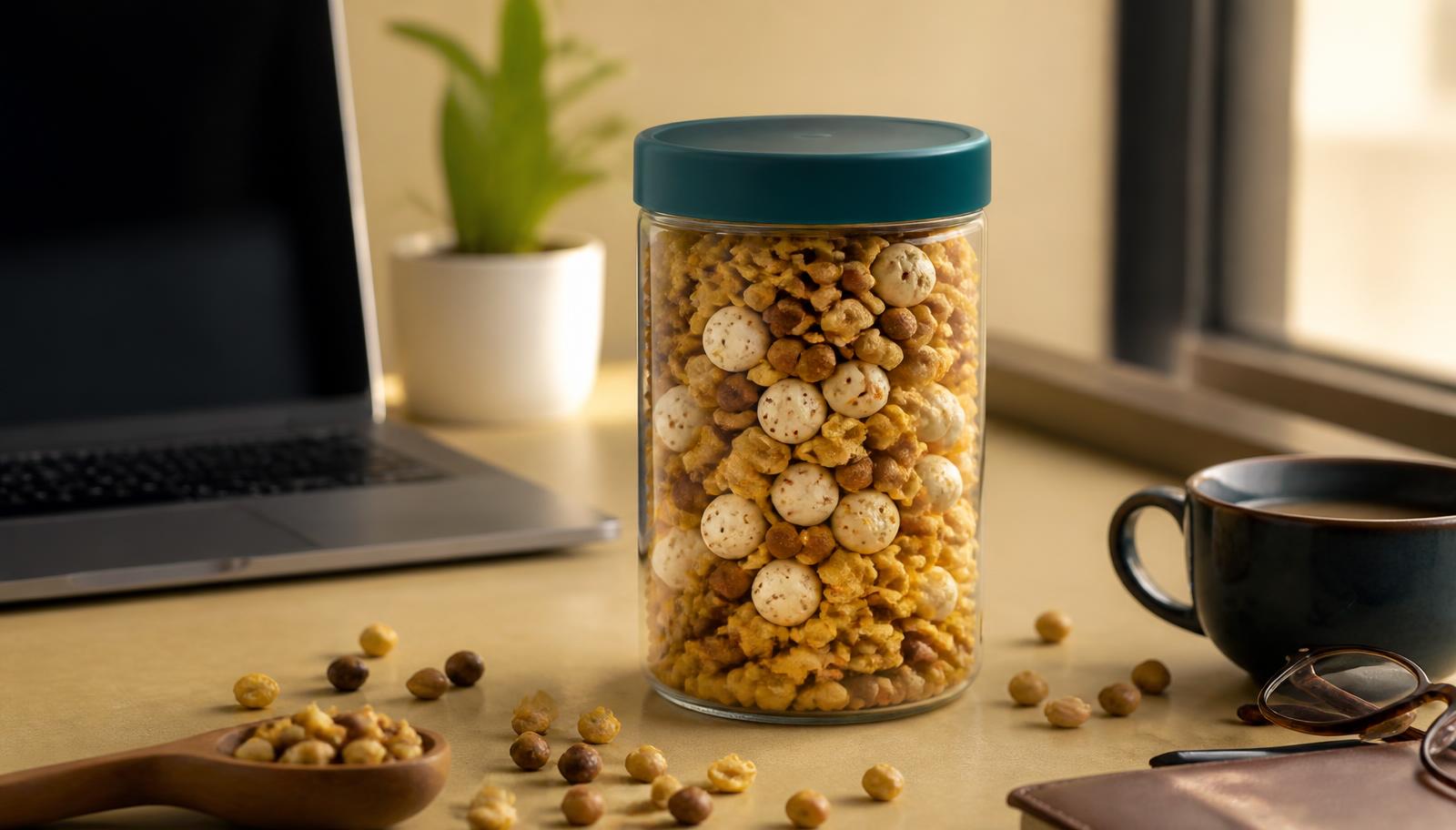
Try BodSpark Classic Hunger: zero-oil roasted chana, peanuts and cornflakes in a carry-anywhere jar. Pre-book roasted chana online or read more about BodSpark.
Frequently Asked Questions
Should roasted chana be eaten with skin or without skin? Both are fine. With skin has more fibre and keeps you full longer, and without skin is easier to digest.
Is roasted chana with skin better for weight loss? Slightly, because of the extra fibre. Portion size matters more.
Does removing the skin reduce protein? Only slightly. The protein stays mostly the same.
Which causes more gas, with skin or without skin? With skin is more likely to cause gas in sensitive people.
Is white chana better than black chana? Neither is better for everyone. Black chana usually has more fibre and crunch, while white chana is milder and softer.
Related Reads
- Roasted Chana Benefits
- Roasted Chana for Weight Loss
- Roasted Chana Nutrition and Calories
- Best Time to Eat Roasted Chana
Health note: This article is for general information and is not medical advice. If you have IBS, ulcers, kidney problems or other conditions, consult a doctor or dietitian. Nutrition values vary by brand.
Written by the BodSpark team · Last updated: October 2026
Try the jar behind the writing
Zero oil, roasted, 100% veg — carry it to the office, the metro or the gym.
Pre-book nowKeep reading
How Much Roasted Chana Should You Eat Daily? (And Can You Really Drink Water After?)
Find the right daily amount of roasted chana for your goal, and learn if you can drink water right after eating it.
8 min readRoasted Chana Nutrition: Calories, Protein, Carbs and Fibre Per 100g and 50g (Full Chart)
Full nutrition chart for roasted chana: calories, protein, carbs, fibre and fat per 100g and 50g, with easy explanations.
5 min readBest Time to Eat Chana for Weight Loss: A Simple, Practical Guide
Wondering about the best time to eat chana for weight loss? Learn when to eat roasted chana, how much to have, and easy tips to stay full longer.
5 min read