Roasted Chana Benefits: Protein, Nutrition and the Best Time to Eat It
An honest guide to roasted chana benefits, protein, calories, portions and label reading for office, travel and everyday Indian snacking.
- roasted chana benefits
- roasted chana protein
- protein in roasted chana
- roasted chana nutrition
- roasted chana calories
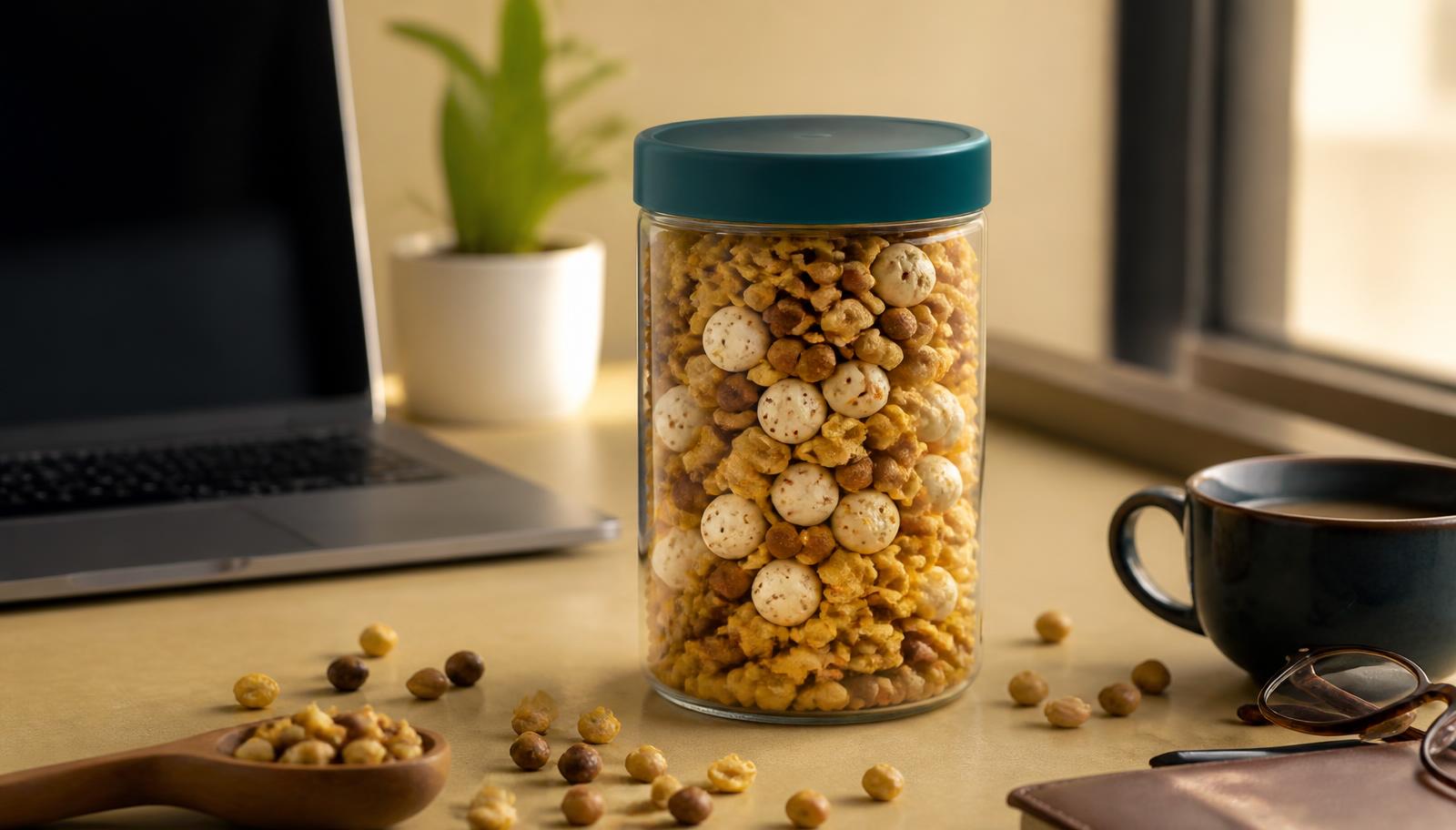
Roasted chana is one of India’s most familiar portable foods. It is inexpensive, shelf-stable, crunchy, and made from a pulse rather than refined flour. Searches for roasted chana benefits and roasted chana protein are growing because people want straightforward snacks that can fit work, travel, and fitness routines.
This guide separates useful facts from exaggerated claims. It explains what roasted chana is, what it contributes nutritionally, how to read protein and calorie figures, and how BodSpark uses it in the Classic Hunger mix. Exact values vary by variety, roasting, seasoning, and serving size, so the pack’s verified nutrition panel should always take priority.
What Is Roasted Chana?
Roasted chana is chickpea that has been cooked by dry heat until crisp. In India, the term often refers to roasted Bengal gram or bhuna chana, with or without its outer skin. It is different from chana dal, boiled chickpeas, and fried gram snacks, so their nutrition values should not be used interchangeably.
The simple version may contain only chana and seasoning. A snack mix may combine it with peanuts, grains, makhana, spices, or oil. Read the ingredient list to know which product you are actually comparing.
Roasted Chana Benefits That Matter
1. Plant protein from a familiar pulse
Chickpeas naturally provide plant protein. Protein supports the maintenance and repair of body tissues, but the amount depends on the product and serving. Roasted chana is useful because it brings protein into an everyday crunchy snack without requiring a shake or bar.
2. Fibre and a firmer bite
Pulses contain dietary fibre. Fibre contributes to normal digestive function and can make a snack feel more satisfying. Roasted chana’s dense texture also encourages slower chewing than many light, refined snacks. Increase fibre gradually and drink enough water if your usual intake is low.
3. Convenient for office and travel
Roasted chana does not need refrigeration for a normal commute or workday when stored correctly. It can sit in a sealed jar in a desk drawer or travel bag and is easy to portion. That convenience matters when the alternative is an unplanned fried snack or sugary drink.
4. Naturally savoury without deep frying
Chana can be dry-roasted to create crunch without deep frying. Whether a packaged product is truly zero oil depends on its recipe, not the ingredient alone. Check for added oils and the words used on the label.
5. Works well with other whole ingredients
Roasted chana can be paired with peanuts for extra richness and cornflakes for a lighter crispness. The result offers varied texture and can feel more enjoyable than eating one ingredient alone. A mix also has a different nutritional profile from plain chana, so avoid copying plain-chana numbers onto the finished product.
How Much Protein Is in Roasted Chana?
Search results often show one confident “protein per 100g” number, but figures differ because databases may describe raw chickpeas, roasted gram, split gram, or a branded seasoned product. Moisture loss during roasting also changes the concentration per 100 grams.
Use these rules when comparing protein:
- 1Make sure both labels describe the same food form.
- 2Compare protein per 100 grams for a fair product-to-product view.
- 3Also check protein per serving, because that is closer to what you will eat.
- 4Do not assume a snack mix has the same number as its main ingredient.
- 5Prefer the tested nutrition panel on the current pack over a generic web figure.
BodSpark will not attach a precise protein claim to Classic Hunger here until the finished recipe has a verified nutrition panel. What we can say is that roasted chana and peanuts both contribute plant protein to the mix.
Roasted Chana Calories: Why Serving Size Matters
Calories are energy, not a score for whether food is good or bad. Roasted chana is more energy-dense than watery foods such as fruit or cucumber, but it also provides protein and fibre. A small bowl and an entire jar are very different servings.
If you are comparing roasted chana with chips or namkeen, compare the same weight and review the whole panel: calories, protein, fibre, total fat, saturated fat, sodium, and added sugar. A front-of-pack “healthy” word cannot replace those details.
Roasted Chana vs Fried Namkeen
The clearest difference is the cooking method. Dry-roasted chana can be made without frying oil, while conventional namkeen often uses oil during frying or seasoning. However, every product has its own recipe.
Check these five things on the pack
- Ingredients: Are chana and other recognisable foods listed first?
- Added oil: Is palm oil or another edible oil present?
- Serving size: Is the panel based on 20g, 30g, or 100g?
- Sodium: How much salt does one realistic serving contain?
- Allergens: Does the mix contain peanuts, milk, gluten, or another allergen relevant to you?
A transparent bottle helps you see the physical ingredients, but the printed ingredient and nutrition panels remain essential.
What Is Inside BodSpark Classic Hunger?
Classic Hunger brings together:
- Roasted chana as the pulse-based foundation
- Roasted peanuts (mungfali) for richer crunch and plant protein
- Cornflakes for a lighter crispy texture
BodSpark describes the mix as zero-oil roasted and 100% vegetarian. The transparent carry bottle is intended for an office desk, commute, or travel bag. For the latest sizes, availability, complete label, and ordering details, visit the Classic Hunger product page.
When to Eat Roasted Chana
There is no single best time. The most useful time is when a planned snack prevents an impulsive choice that does not suit your goals.
Morning or between breakfast and lunch
If breakfast was small, a measured portion can provide crunch and plant protein. It should not routinely replace a balanced breakfast containing several food groups.
The 4–6 PM office hunger window
This is when biscuits, samosa, chips, and vending-machine snacks become tempting. Keeping roasted chana nearby makes the better-planned choice easier. Pour a portion and put the bottle away rather than eating continuously at your desk.
Before or after exercise
Roasted chana can contribute carbohydrate and plant protein, but individual exercise nutrition depends on session length, intensity, digestion, and total diet. It is not a direct substitute for a complete post-workout meal when one is needed.
During travel
A secure container reduces spills and protects the crunch. Carry water too, especially when eating a fibre-rich dry snack. Read our travel snack packing guide for more ideas.
Is Roasted Chana Good for Weight Loss?
No food produces weight loss by itself. Roasted chana may fit a weight-management plan because protein, fibre, and a crunchy texture can make a measured serving satisfying. Results still depend on total energy intake, meals, activity, sleep, and individual health.
Avoid unlimited portions simply because a food is roasted. Use a bowl or small container, eat without rushing, and notice whether you are physically hungry or only reaching for something while working.
Who Should Be Careful?
People who are not used to pulses may experience gas or digestive discomfort from a large serving. Start smaller if needed. Anyone with a peanut allergy must avoid mixes containing peanuts. People following a sodium-restricted diet should check seasoning and sodium on the label. For diabetes, kidney disease, digestive conditions, or a prescribed diet, ask a qualified clinician about the serving appropriate for you.
Frequently Asked Questions
Is roasted chana a high-protein snack?
Roasted chana provides plant protein and can be a useful protein-containing snack. Whether a particular product qualifies for a regulated “high protein” claim depends on its verified nutrition values and applicable labelling rules.
Is roasted chana better with or without the skin?
Both can fit a balanced diet. The outer skin contributes fibre, while some people prefer the texture of peeled chana. Choose based on the product label, tolerance, and taste rather than expecting a dramatic health difference.
Can roasted chana be eaten daily?
For many people, a sensible portion can be part of a varied diet. Rotate it with fruit, curd, nuts, seeds, and other pulses. Your total diet matters more than repeating one “superfood.”
Is roasted chana zero oil?
Plain dry-roasted chana can be made without oil, but some commercial versions add oil during seasoning. Check the ingredients. BodSpark Classic Hunger is described as a zero-oil roasted mix.
Does Classic Hunger contain peanuts?
Yes. Classic Hunger contains roasted peanuts and is not suitable for people with a peanut allergy. Refer to the product pack for the complete allergen statement.
The Bottom Line
Roasted chana earns its place as a practical Indian snack because it combines plant protein, fibre, crunch, and portability. The best choice is not the article with the biggest promise; it is a product with a clear ingredient list, a serving you can manage, and claims supported by its current label.
Explore BodSpark Classic Hunger and the other zero-oil roasted mixes, or learn what zero-oil roasting actually means.
Keep reading
Try the jar behind the writing
Zero oil, roasted, 100% veg — carry it to the office, the metro or the gym.
Pre-book nowKeep reading
How Much Roasted Chana Should You Eat Daily? (And Can You Really Drink Water After?)
Find the right daily amount of roasted chana for your goal, and learn if you can drink water right after eating it.
8 min readRoasted Chana With Skin or Without Skin: Which Is Better? (The Answer Depends on Your Stomach)
With skin or without skin? See which roasted chana is better for digestion, fibre and weight loss, plus black vs white chana.
6 min readRoasted Chana Nutrition: Calories, Protein, Carbs and Fibre Per 100g and 50g (Full Chart)
Full nutrition chart for roasted chana: calories, protein, carbs, fibre and fat per 100g and 50g, with easy explanations.
5 min read