Roasted Makhana Benefits: Nutrition, Protein and Zero-Oil Snacking
A practical guide to roasted makhana benefits, protein, portions and zero-oil snacking — plus what to check before choosing a makhana mix.
- roasted makhana benefits
- makhana benefits
- makhana nutrition
- makhana protein
- makhana snack
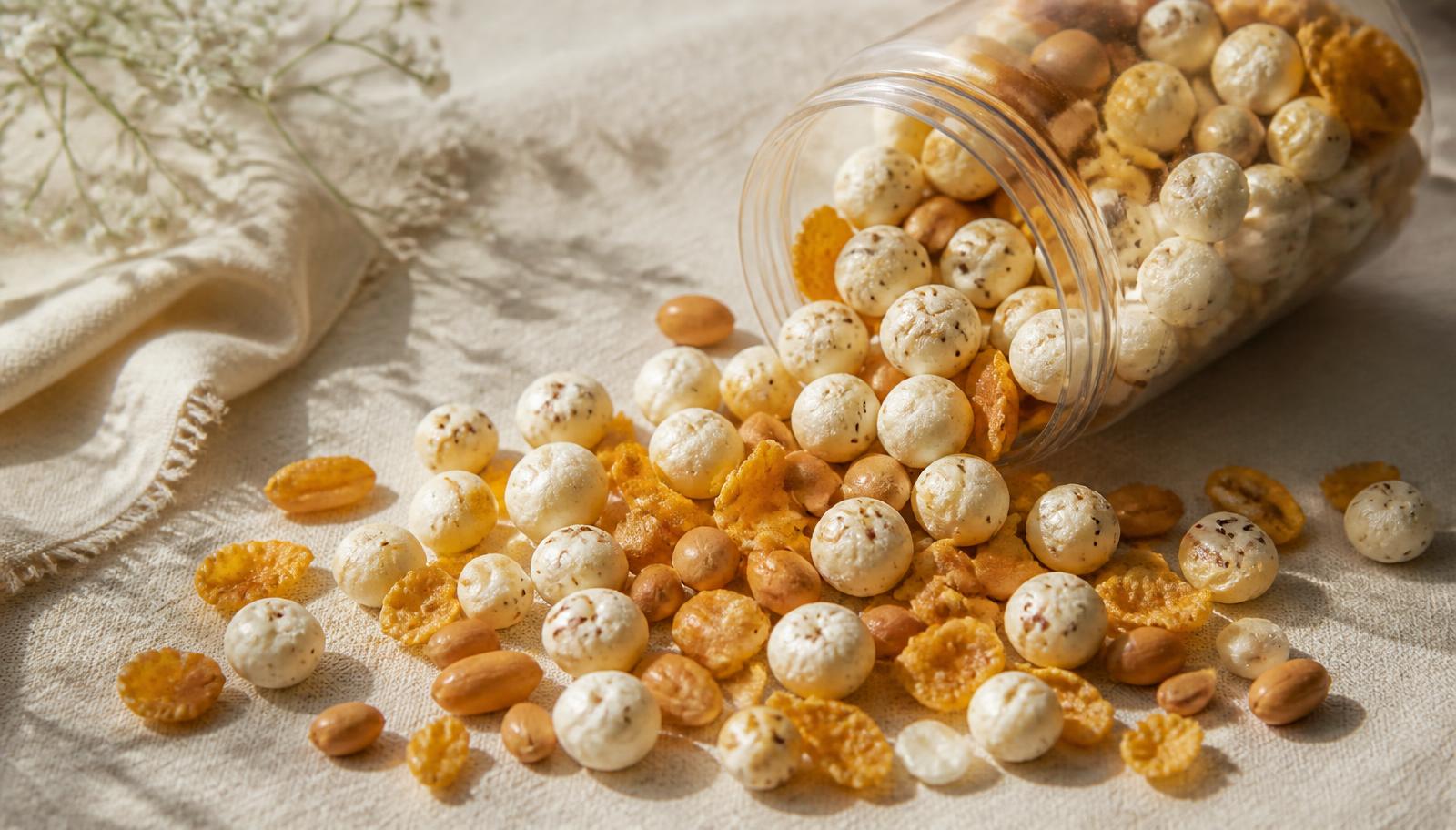
Roasted makhana is familiar in Indian kitchens, but many people now search for it for a practical reason: they want a crunchy snack that is not deep-fried. Makhana, also called fox nut, is the popped seed of the aquatic plant Euryale ferox. It can be eaten plain, seasoned, or combined with nuts and grains.
This guide explains the roasted makhana benefits that are supported by its food profile, how to compare it with everyday packaged snacks, and where BodSpark Makhana Lite fits. It does not treat one ingredient as a miracle food. Your overall diet, serving size, and the complete ingredient list still matter.
What Is Roasted Makhana?
Makhana is harvested as a seed, processed, popped, and then roasted to create its familiar light crunch. It is sometimes called lotus seed in everyday conversation, although fox nut is the more precise English name for Euryale ferox.
Roasting is a cooking method, not automatically a health guarantee. Some products called roasted makhana still use added oil, sugar, or heavy seasoning. If avoiding oil matters to you, check the ingredient list rather than relying only on the word “roasted” on the front.
Roasted Makhana Benefits in an Everyday Diet
1. A light, crunchy alternative to fried snacks
Plain makhana is naturally low in fat. When it is dry-roasted without oil, it can provide crunch without the added frying oil found in many chips and namkeen products. That makes it a useful option when you want something savoury but do not want a greasy snack.
2. It provides useful minerals
Makhana contains minerals including magnesium, phosphorus, potassium, calcium, and iron. The exact amount you eat depends on the serving and the complete mix. These nutrients have normal roles in the body, but a snack should not be presented as a cure or medicine.
3. It can help create a more satisfying snack mix
Makhana is airy on its own. Combining it with peanuts adds plant protein and fat, while cornflakes add a contrasting crisp texture. A mixed snack can therefore feel more substantial than plain makhana alone. Satisfaction also depends on serving size and what else you eat that day.
4. It is easy to portion and carry
Dry roasted snacks are convenient for a desk drawer, commute, train journey, or afternoon break. A closable transparent jar also makes the quantity and ingredients visible. Portion a small bowl or handful instead of eating without noticing how much is gone.
5. It works across different moments
Roasted makhana does not need preparation at the time you eat it. It can work with morning tea, during the 4–6 PM office hunger window, while travelling, or as a savoury evening snack. It is a snack, not a replacement for balanced meals.
Is Roasted Makhana High in Protein?
Makhana contains some plant protein, but plain makhana should not be described as one of the most protein-dense foods. For perspective, published food data lists about 4.9 grams of protein in 32 grams of dried lotus seeds; values can vary by source and preparation.
If protein is your priority, look at the whole snack rather than one ingredient. BodSpark Makhana Lite combines roasted makhana with peanuts, which contribute additional plant protein. We do not publish an exact protein number for the finished jar until a verified nutrition panel is available.
What Is Inside BodSpark Makhana Lite?
The Makhana Lite variant uses three familiar ingredients:
- Roasted makhana for the light, airy base
- Roasted peanuts (mungfali) for a deeper crunch and plant protein
- Cornflakes for a crisp finish
BodSpark describes this mix as zero-oil roasted and 100% vegetarian. The clear bottle lets you see the snack before you eat it. For the current ingredient statement, pack sizes, availability, and ordering details, visit the BodSpark product page.
Zero-Oil Roasted vs Fried: What Changes?
Deep frying cooks food in oil, so the finished snack absorbs some of that fat. Dry roasting uses heat without frying oil. This does not mean you can ignore the serving size, seasoning, sodium, or other ingredients, but it gives shoppers a clear point of comparison.
Use this quick label check:
- 1Read the full ingredients list, not only the large claim on the front.
- 2Check whether edible oil appears in the ingredients.
- 3Look at the nutrition panel for serving size, fat, sodium, protein, and sugar.
- 4Compare equal weights when deciding between two snacks.
- 5Check allergen information; Makhana Lite contains peanuts.
Makhana for Weight Management: Keep the Claim Realistic
No single snack causes weight loss. Weight change depends on total food intake, activity, sleep, and individual health. Roasted makhana can fit into a weight-management routine because a measured portion offers plenty of visible volume and crunch, especially when compared with a similarly sized fried snack.
The practical approach is simple: pour a portion into a bowl, close the jar, and eat it slowly. People with specific medical needs should use advice from a qualified doctor or dietitian rather than treating online snack guidance as personal medical advice.
Is Makhana Suitable for People With Diabetes?
The answer depends on the product, portion, medicines, and the rest of the meal. Makhana contains carbohydrate, so it can affect blood glucose. Some research discusses makhana’s resistant starch and metabolic potential, but that does not make every makhana snack automatically suitable for every person with diabetes.
If you monitor blood glucose, check the complete label and ask your clinician how a particular serving fits your plan. Avoid broad promises such as “diabetic-safe” unless a product has been specifically assessed for that claim.
When Is the Best Time to Eat Roasted Makhana?
There is no medically required best time. Choose the moment when it helps you replace a less useful impulse purchase:
- At work: keep a portion ready before the 4–6 PM hunger window.
- During travel: carry the closed jar where it will not be crushed.
- With morning tea: use it when you want a savoury option rather than a sweet biscuit.
- Between meals: treat it as a planned snack, not a full meal substitute.
For more practical choices, read our guide to high-protein snacks for Delhi office hunger and our explanation of what zero-oil roasting means.
Frequently Asked Questions
Is roasted makhana healthy?
It can be part of a balanced diet. Plain or zero-oil roasted makhana offers a light crunch and useful nutrients. The seasoning, sodium, added oil, serving size, and total diet determine how a particular product fits your needs.
Can I eat roasted makhana every day?
Many people can include it regularly in sensible portions. Rotate snacks across nuts, pulses, fruit, curd, and other foods so your diet stays varied. Check allergies and medical advice relevant to you.
Does roasted makhana contain protein?
Yes, makhana contains plant protein, although it is not as protein-dense as many pulses or nuts. A mix containing peanuts can provide more protein than plain makhana, depending on the recipe.
Is Makhana Lite fried?
BodSpark Makhana Lite is described as zero-oil roasted, not fried. It contains makhana, peanuts, and cornflakes. Always refer to the package label for the latest batch information.
Does Makhana Lite contain peanuts?
Yes. Anyone with a peanut allergy should not eat it. Check the pack for the complete allergen statement before purchase.
The Bottom Line
The strongest roasted makhana benefit is practical: it gives you a light, crunchy base for a snack that does not need to be deep-fried. Choose a clearly labelled product, compare equal serving sizes, and keep the portion realistic. BodSpark Makhana Lite pairs roasted makhana with peanuts and cornflakes in a transparent carry bottle for office breaks, travel, and everyday hunger.
See the real bottle, available sizes, and current ordering information on the Makhana Lite product page.
Keep reading
Try the jar behind the writing
Zero oil, roasted, 100% veg — carry it to the office, the metro or the gym.
Pre-book nowKeep reading
How Much Roasted Chana Should You Eat Daily? (And Can You Really Drink Water After?)
Find the right daily amount of roasted chana for your goal, and learn if you can drink water right after eating it.
8 min readRoasted Chana With Skin or Without Skin: Which Is Better? (The Answer Depends on Your Stomach)
With skin or without skin? See which roasted chana is better for digestion, fibre and weight loss, plus black vs white chana.
6 min readRoasted Chana Nutrition: Calories, Protein, Carbs and Fibre Per 100g and 50g (Full Chart)
Full nutrition chart for roasted chana: calories, protein, carbs, fibre and fat per 100g and 50g, with easy explanations.
5 min read